2026-10-19 ·
Complete Guide to Septic backup cleanup in Waldorf, Maryland
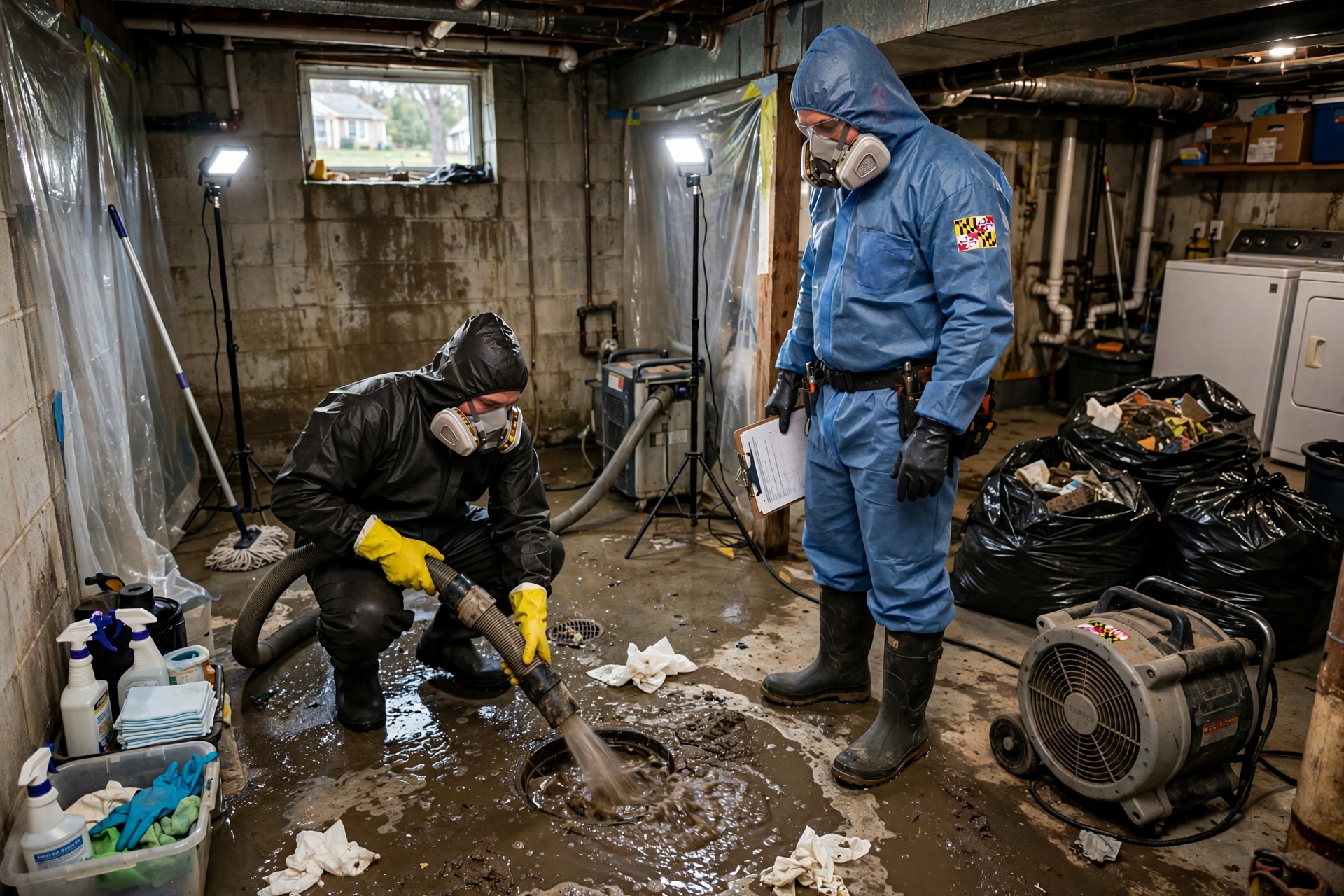
Septic backup cleanup in Waldorf, Maryland starts with rapid sewage extraction followed by disinfection to limit bacterial spread in humid subtropical conditions. Homes built decades ago in Pinefield and Accokeek commonly rely on septic tanks that struggle during hot summers when evaporation rates drop and heavy rains saturate soil. The process addresses both liquid waste and contaminated solids that can migrate into basements near the St. Charles Towne Center corridor.
Common Causes of Septic Backups in Charles County
Many properties along Crain Highway and in Westlake feature aging concrete tanks installed before modern sizing standards. Tree roots from mature landscaping invade lines during the wet spring months, while grease buildup accelerates in households near the Waldorf Jaycees Community Center. Hot summers increase bacterial activity inside tanks, producing gases that push solids into drain fields. Nearby La Plata and Brandywine residents report similar failures after prolonged storms because clay-heavy soils drain slowly and keep effluent near the surface.
Heavy rainfall events common to the region can raise the water table and flood distribution boxes, sending wastewater back into homes. In Pinefield, narrow lots limit drain-field expansion, so even modest increases in household water use overwhelm older 1,000-gallon tanks. These site-specific factors turn routine maintenance into urgent septic backup cleanup calls throughout Charles County.
Step-by-Step Septic Backup Cleanup Process
Technicians first isolate the affected area and pump standing effluent using truck-mounted equipment rated for black water. Next they remove saturated carpet, drywall, and insulation within 24 inches of the water line to prevent hidden mold colonies. All surfaces receive EPA-registered disinfectants followed by HEPA air scrubbing to reduce odors. Final verification includes moisture readings below 15 percent before reconstruction begins.
Homeowners in St. Charles benefit from crews familiar with slab-on-grade construction typical of 1970s subdivisions, where waste migrates under footings. Septic backup cleanup crews coordinate with county health inspectors to document proper disposal at approved facilities. Structural drying follows immediately because residual humidity in summer air can re-contaminate porous materials within hours.
Health Risks and Safety Protocols
Raw sewage contains pathogens that thrive in Waldorf’s warm, moist climate, raising infection risks for residents with compromised immune systems. Proper PPE, negative-air machines, and containment barriers protect both technicians and occupants during removal. Contaminated material is double-bagged and transported separately from clean debris to avoid cross-contamination at landfills.
After extraction, odor removal requires targeted application of enzymatic cleaners rather than simple masking agents. Properties near Accokeek often need additional soil remediation when effluent reaches yards, because sandy loam allows faster lateral spread than expected. Sewage backup cleanup protocols include post-job air-quality testing to confirm safe re-entry.
Prevention Strategies for Waldorf Homeowners
Schedule tank inspections every three years for homes in Westlake and every two years for older Pinefield properties. Install effluent filters and water-conserving fixtures to reduce hydraulic load during peak summer usage. Route downspouts away from drain fields and avoid parking vehicles over lateral lines. Residents can review the related guide on sewer backup cleanup for additional steps tailored to gravity systems common in Brandywine.