2026-10-19 ·
Complete Guide to Sewage extraction and removal in Waldorf, Maryland
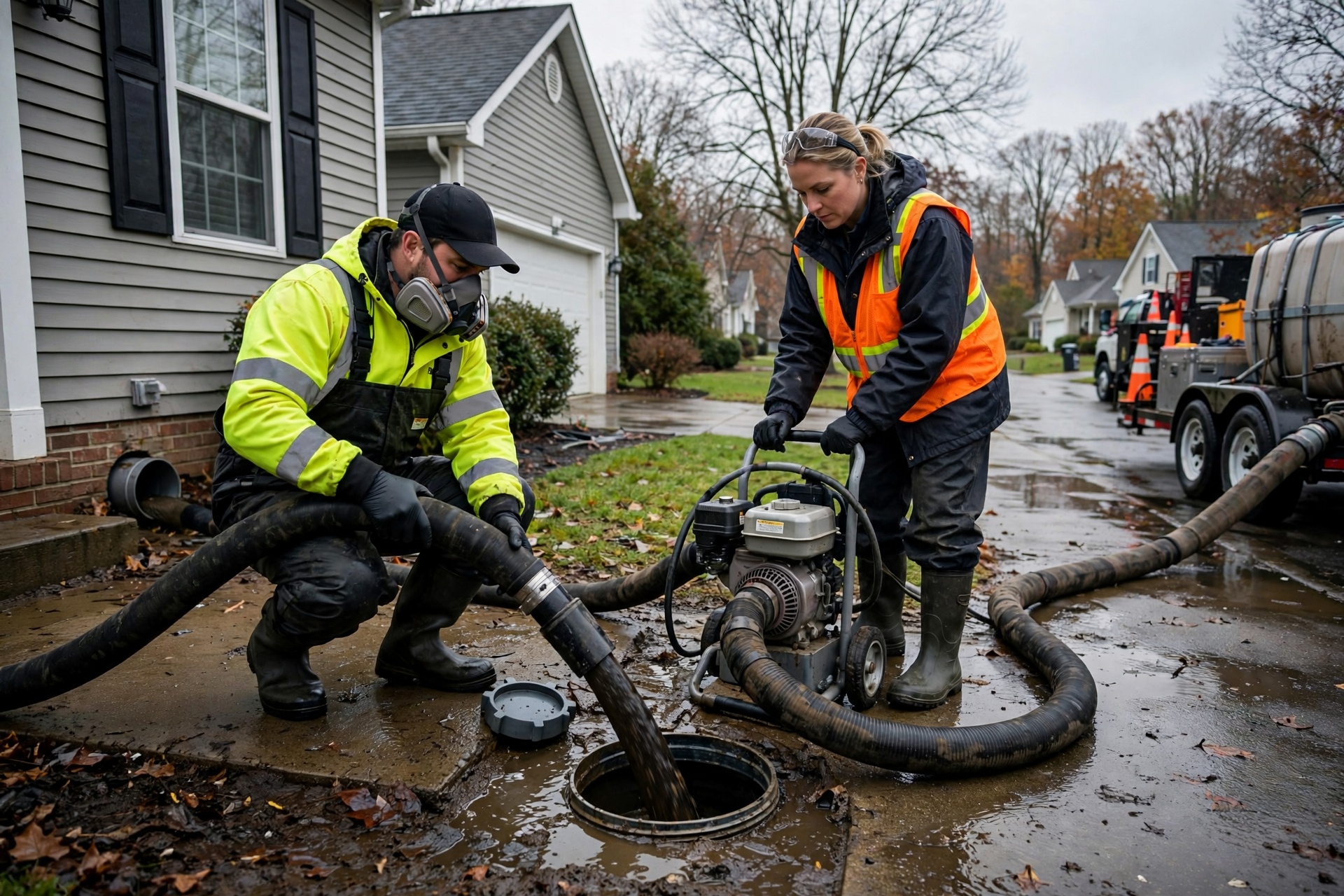
Sewage extraction and removal in Waldorf typically begins with rapid containment and pumping within the first few hours of discovery to limit structural damage in split-level and ranch homes common throughout St. Charles and Pinefield. Crews use truck-mounted pumps rated for 200-500 gallons per minute to pull standing effluent from basements and crawl spaces before it migrates into finished flooring or HVAC returns. In Charles County properties built before 1990, older cast-iron lines often fail under root intrusion or heavy summer rains, making extraction the critical first step before any disinfection work.
Common Causes of Sewage Backups in Waldorf
Waldorf's humid subtropical climate brings intense summer downpours that overwhelm aging sewer mains near the St. Charles Towne Center and along Berry Road Corridor. Heavy clay soils in Westlake and Accokeek retain moisture, increasing hydrostatic pressure on foundation drains and septic connections in nearby La Plata and Brandywine. Tree roots from mature oaks common in Pinefield neighborhoods penetrate joints in 4-inch laterals, while grease buildup from household waste accelerates blockages during hot months when usage spikes. Homes in these areas often feature slab-on-grade construction or finished basements added in the 1970s-1980s, both of which trap water longer than newer elevated builds.
Residents near the Waldorf Jaycees Community Center frequently report backups after storms because stormwater infiltration into combined systems raises the water table. These conditions require extraction crews to account for higher volumes and slower gravity drainage compared to drier inland counties.
Step-by-Step Sewage Extraction Process
Technicians start by isolating the affected zone with containment barriers to prevent cross-contamination into living spaces. Submersible pumps and wet vacuums remove bulk liquid, followed by moisture meters to locate hidden pockets behind baseboards or under tile in Accokeek split-levels. Extracted waste is transferred to sealed holding tanks for proper disposal at approved facilities. In Westlake homes with finished lower levels, crews may need to remove sections of drywall up to 24 inches above the water line to access saturated insulation. The process usually takes 4-8 hours for a standard 1,800-square-foot residence depending on volume and access points.
After bulk removal, air movers and dehumidifiers begin structural drying while extraction continues on any remaining sludge. This sequence prevents secondary mold growth that thrives in Charles County's high humidity levels lasting well into fall.
Equipment and Local Terrain Considerations
Portable extraction units with 2-inch hoses handle tight crawl spaces under Pinefield ranches where full-size trucks cannot maneuver. Terrain slopes in parts of St. Charles direct flow toward lower foundations, requiring additional perimeter pumping before interior work starts. Hot summer temperatures above 85 degrees accelerate bacterial growth, so crews prioritize extraction before temperatures peak midday. In Brandywine and La Plata outskirts, longer drive times from the 3840 Crain Hwy base mean pre-staging equipment during storm watches to maintain 24/7 Emergency Service response.
Operators adjust pump rates based on soil saturation reports from local weather stations, avoiding over-extraction that could undermine footings on clay-heavy lots.
Health Risks and When to Seek Professional Help
Raw sewage contains pathogens that remain viable for days in warm, moist Waldorf basements, raising infection risks for children and pets in households near Smallwood Village. Visible signs such as slow drains, gurgling toilets, or water stains on lower-level floors warrant immediate extraction rather than DIY attempts that often spread contamination. Professional teams follow containment protocols that protect HVAC systems common in 1980s Charles County homes, preventing airborne distribution throughout the structure.