2026-10-19 ·
Complete Guide to Structural drying and dehumidification in Waldorf, Maryland
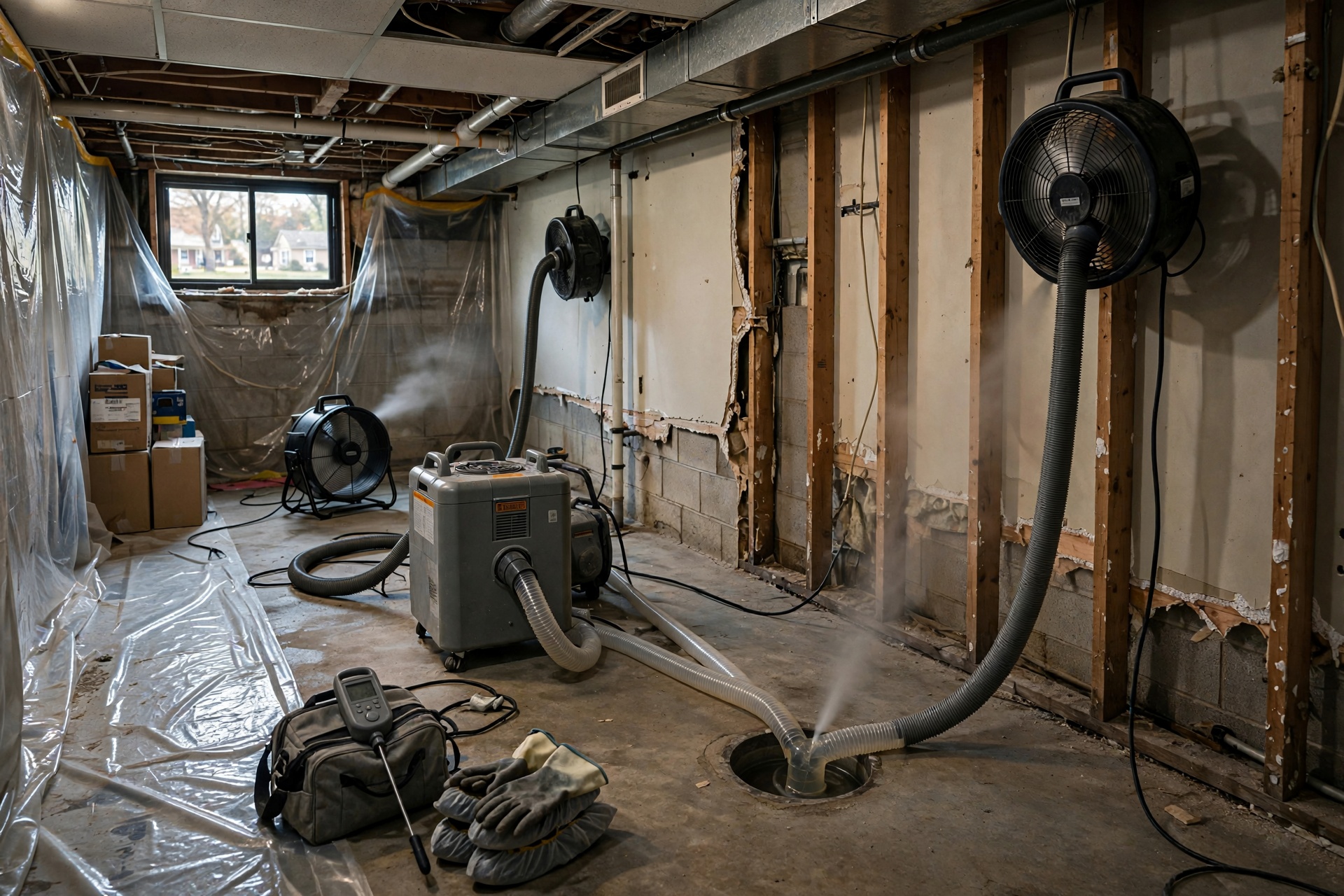
In Waldorf's humid subtropical climate, structural drying and dehumidification after sewage backups typically takes 3–7 days of continuous air mover and dehumidifier operation to bring affected wood and drywall below 15% moisture content. Homes built before 1990 in neighborhoods such as Pinefield and Accokeek often retain moisture longer due to older framing and limited crawlspace ventilation.
Moisture Challenges in Charles County Housing Stock
Waldorf's older single-family homes in St. Charles and Westlake sit on clay-heavy soils that slow natural drainage after heavy summer rains. When sewage backup occurs, water migrates into subfloors and wall cavities faster than in newer construction. Operators must place moisture meters at multiple depths because visible surface readings often mask hidden saturation 4–6 inches behind baseboards. The county's hot, humid summers keep ambient relative humidity above 70% for weeks, forcing dehumidifiers to run longer cycles than in drier regions. Technicians at 3840 Crain Hwy routinely map these patterns before equipment placement to avoid under-drying that leads to hidden mold.
Equipment Setup for Local Conditions
Air movers angled at 45 degrees across wet carpet and hardwood direct airflow into wall cavities while avoiding dust redistribution common in older Pinefield properties. Commercial dehumidifiers rated at 70–150 pints per day handle the high moisture load from sewage events better than residential units. In Westlake basements with low ceilings, low-profile units fit under joists without blocking access. Daily moisture logs track progress; readings that drop less than 2% per day signal the need for additional airflow or targeted demolition. These steps tie directly into full sewage backup cleanup to prevent recontamination during the drying phase.
Drying Timelines After Sewage Events
Initial extraction removes standing water within hours, yet residual moisture in 2x4 framing can require 72–120 hours of drying when outdoor dew points stay elevated. In St. Charles homes with finished basements, drywall removal 12–18 inches above the water line accelerates the process by exposing wet insulation. Technicians check for trapped water behind electrical boxes and HVAC returns, areas that retain moisture weeks longer without intervention. Continuous monitoring prevents the 40–60% humidity rebound that occurs when equipment is pulled too early in Maryland's summer conditions. See the related guide on basement sewage cleanup in Waldorf for integrated extraction and drying sequences.
Post-Drying Verification and Odor Control
Final verification uses both pin and pinless meters plus thermal imaging to confirm no pockets exceed 15% moisture. In Accokeek properties near wooded lots, lingering sewage odors often trace to saturated subfloor plywood that requires targeted removal rather than drying alone. Once levels stabilize, HEPA air scrubbers run 24–48 hours to capture spores stirred during the process. Homeowners in St. Charles receive written moisture maps showing pre- and post-drying readings for insurance documentation. This verification step completes the structural drying and dehumidification service and reduces callback risk during humid months.